

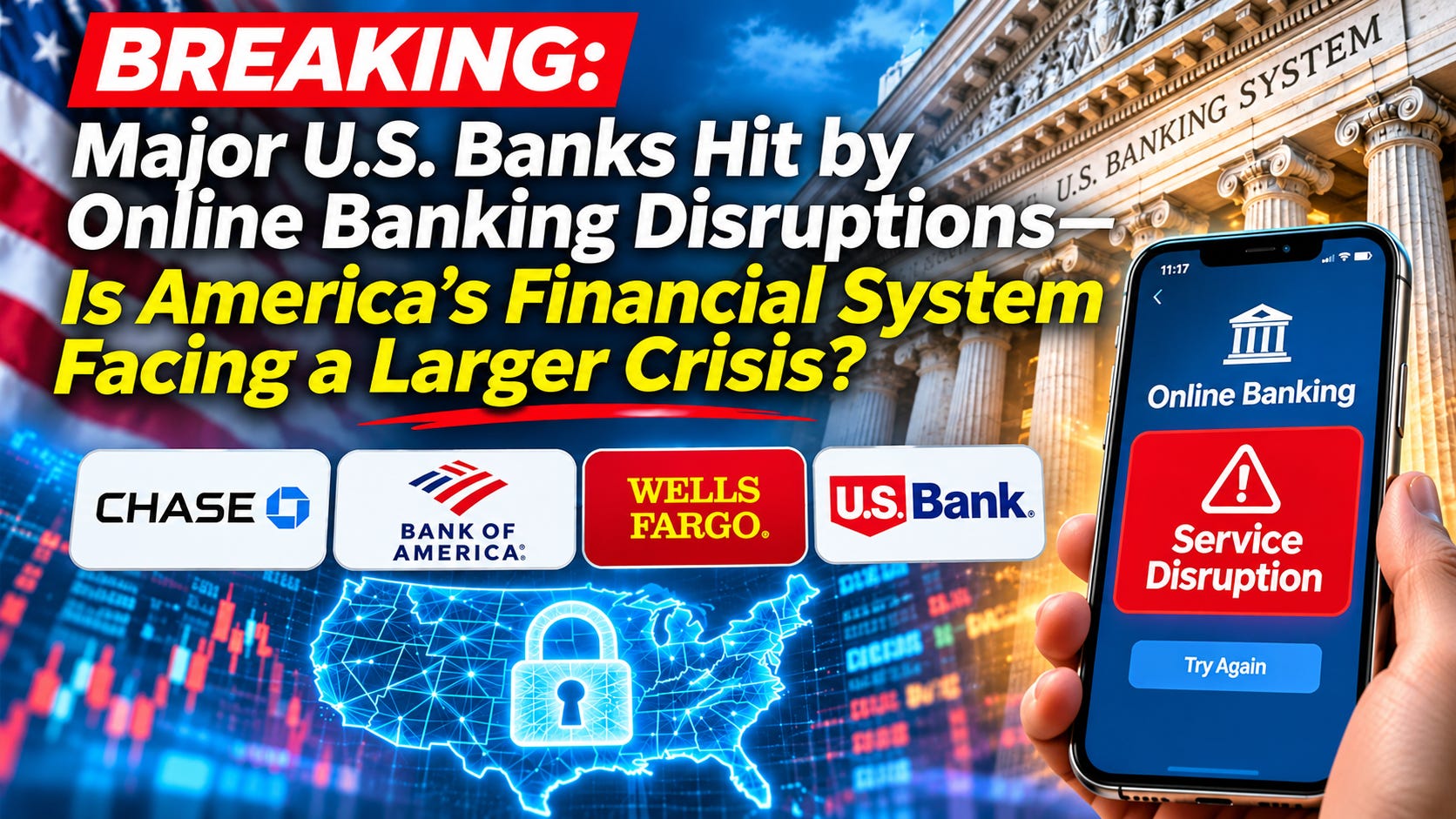
Days after a nationwide FAA ground stop, customers report banking disruptions at Chase, Bank of America, Wells Fargo, and U.S. Bank as FEMA prepares for a November 17 emergency alert test—raising urgent questions about America’s critical infrastructure, cybersecurity, and national preparedness.

📚 DISCOVER TROY ANDERSON’S BESTSELLING BOOK COLLECTION
Explore Troy Anderson’s bestselling books on biblical prophecy, national security, spiritual warfare, and faith—including The Trump Code, The Military Guide to Armageddon, I’ve Been to Heaven, Revelation 911, and his latest release, Trump vs. the Beast, coauthored with Pastor Paul Begley. Discover compelling insights and extraordinary stories to strengthen your faith, understand the times, and stand ready for the challenges ahead.
Banking Disruptions Raise New Questions About America’s Financial Infrastructure
A wave of online banking disruptions swept across several of America’s largest financial institutions on Monday, November 16, 2026, as customers reported difficulties accessing accounts, completing transactions, and using digital payment services. The complaints involved JPMorgan Chase, Bank of America, Wells Fargo, U.S. Bank, and other institutions, raising concerns about the reliability of the interconnected technologies that millions of Americans depend upon to manage their finances.
According to the Associated Press and Reuters, the outage-monitoring website Downdetector recorded increased customer reports involving several major banks. Chase acknowledged a technical problem that delayed certain transactions, while U.S. Bank clarified that its systems were not directly affected, although some customers could experience delays involving Zelle payments with other financial institutions.
The disruptions occurred just three days after the Federal Aviation Administration ordered a nationwide ground stop following a telecommunications failure that affected air traffic control systems. Meanwhile, the Federal Emergency Management Agency (FEMA), in coordination with the Federal Communications Commission (FCC), is preparing to conduct a previously scheduled nationwide Emergency Alert System test on Tuesday, November 17. Although officials have not established any connection between these events, their proximity highlights a broader question: How resilient is America’s critical infrastructure when the digital systems supporting transportation, banking, communications, and emergency services experience unexpected failures?
Support Our Mission—Become a Paid Subscriber Today. Your support helps sustain the investigative reporting, research, writing, and production behind Battle Ready News, empowering us to equip believers with biblical truth, spiritual discernment, courage, and hope while sharing the Good News of Jesus Christ with the world.
What Happened at America’s Largest Banks?
The banking problems became increasingly visible Monday as customers reported difficulties logging into accounts, verifying transactions, and completing electronic payments. Downdetector listed complaints involving Chase, Bank of America, Wells Fargo, U.S. Bank, and Truist, although the reports represented user-submitted complaints rather than verified counts of affected customers. Chase confirmed that certain transactions were taking longer than usual because of a technical problem, emphasizing that customers retained access to their accounts and funds while the bank worked to restore normal processing.
U.S. Bank offered an important clarification, stating that its systems were not directly affected but that customers attempting Zelle transactions with other financial institutions might encounter delays. Because Zelle operates through participating financial institutions, difficulties with individual banks can interfere with payments without necessarily establishing that the entire Zelle network has failed. The available reporting did not identify a common technical cause across the institutions or establish that the disruptions resulted from a coordinated cyberattack.
For Americans who depend on digital banking to receive paychecks, pay mortgages, transfer money, and manage everyday expenses, even temporary interruptions can create significant inconvenience. For businesses processing payroll or making time-sensitive payments, the consequences can extend beyond delayed transactions, illustrating how deeply electronic financial infrastructure has become embedded in the nation’s economic life.

Discover Trump vs. the Beast
By Pastor Paul Begley and Troy Anderson | Forewords by Kevin Sorbo and Joseph Z
Could artificial intelligence, emerging global powers, and escalating geopolitical tensions be setting the stage for the rise of the Antichrist? Discover the compelling investigations, prophetic insights, and powerful message of faith and hope in Trump vs. the Beast: The Ten Kings Prophecy and the Bible’s Revelation of Coming Final Days (Humanix Books/Newsmax Media, October 6, 2026), the #1 “Best Seller” and #1 “Hot New Release” in “Prophecies” on Amazon.
Nationwide Emergency Alert Test Scheduled for November 17
As Americans confront growing concerns about the reliability of critical infrastructure, the Federal Emergency Management Agency (FEMA), in coordination with the Federal Communications Commission (FCC), is preparing to conduct a nationwide Emergency Alert System (EAS) test on Tuesday, November 17, 2026, at 2:20 p.m. Eastern Time (11:20 a.m. Pacific). The test will briefly interrupt participating radio, television, cable, and satellite programming to evaluate the nation’s ability to deliver emergency warnings during a national crisis.
According to the FCC, the test was announced on September 16 and will use FEMA’s Integrated Public Alert and Warning System (IPAWS). The broadcast interruption is expected to last approximately one minute, with no nationwide cellphone alert planned and no action required from the public. Although the test was scheduled well before the November 13 FAA ground stop and November 16 banking disruptions, the timing of these developments raises broader questions about America’s technological resilience.
Within days, Americans have witnessed a nationwide aviation shutdown, widespread digital banking disruptions, and preparations for a national emergency communications test. While no common cause has been established, these developments invite important questions: Are government agencies and major institutions adequately prepared for more serious disruptions? And what should Americans do now to protect their families and prepare for an increasingly uncertain future?
Is America’s Critical Infrastructure Becoming More Vulnerable?
The November 16 banking disruptions followed another extraordinary event just three days earlier, when the Federal Aviation Administration (FAA) ordered a nationwide ground stop after a telecommunications failure disrupted critical air traffic control systems. The shutdown affected departing aircraft across the country and exposed vulnerabilities in America’s aging aviation infrastructure. We examined the incident in our earlier Battle Ready News investigation, “BREAKING: FAA Grounds Flights Nationwide as Aging Air Traffic Control System Fails—Is America’s Critical Infrastructure at Risk?”.
According to the FAA’s November 15 update, instability involving its legacy telecommunications network disrupted aircraft communications and radar feeds, prompting investigators to examine equipment and network connections at facilities in Texas and Arkansas. The agency reported that service stabilized after affected connections were isolated, although investigators continued examining the underlying technical failure and potential safeguards against future disruptions.
Coming amid recent Microsoft service interruptions and widespread banking complaints, the aviation shutdown raises urgent questions about the resilience of America’s essential infrastructure. Modern banking, aviation, telecommunications, and emergency services depend on increasingly complex digital networks, where technical failures can disrupt transportation, commerce, and financial transactions. Are these systems sufficiently protected against unexpected failures? Have years of technological dependence created vulnerabilities that demand greater attention? And is America adequately prepared for a more serious disruption?
Discover The Trump Code
By Troy Anderson | Seven-Time #1 Bestselling Author and Investigative Journalist
Could the 19th century Baron Trump novels by Ingersoll Lockwood, biblical prophecy, and extraordinary coincidences reveal a deeper story behind Donald Trump’s rise to power and America’s future? In The Trump Code, Troy Anderson explores remarkable historical parallels, prophetic mysteries, and the spiritual questions surrounding one of the most consequential political figures of our time. ORDER YOUR COPY TODAY
Could a Larger Cybersecurity Threat Be Emerging?
Whenever several major financial institutions experience technical difficulties within a short period, cybersecurity concerns naturally emerge. America’s banks, transportation networks, communications systems, and other essential services represent attractive targets for cybercriminal organizations and hostile foreign actors. Although Chase characterized its November 16 disruption as a technical issue rather than a cyberattack, the incident highlights how heavily the nation’s economic stability depends on secure, reliable digital infrastructure.
The larger investigative question is whether America’s financial institutions and government agencies have sufficient safeguards against both accidental failures and deliberate attacks. As essential services become increasingly interconnected, even a localized malfunction can create widespread consequences. Are current cybersecurity protections, backup systems, and emergency response procedures adequate for a more serious national crisis? And what steps should policymakers, businesses, and American families take before the next major disruption occurs?
Digital Banking, Financial Control, and the Future of Economic Freedom
Beyond the immediate banking problems lies a broader question about the transformation of the global financial system. Banks, technology companies, and governments are exploring artificial intelligence, blockchain-based settlement, tokenized assets, and increasingly automated payment networks. Central banks have also investigated central bank digital currencies, commonly known as CBDCs, raising important debates about financial privacy, government oversight, cybersecurity, and the future of cash.
These technologies could improve financial efficiency and expand access to services, but they also raise questions about the concentration of economic power and society’s dependence on digital infrastructure. When consumers rely almost entirely on electronic systems to access their money, complete transactions, and conduct business, the reliability and accountability of those systems become matters of considerable public importance. The November 16 banking disruptions do not establish that a financial reset is underway, that CBDCs are being introduced through a coordinated strategy, or that cryptocurrencies such as XRP are about to replace conventional banking networks.
In my investigative book The Babylon Code, the #1 FaithWords/Hachette Book Group bestseller coauthored with Paul McGuire, we examine historical and prophetic questions surrounding globalism, the Mark of the Beast system, and “Mystery Babylon” in the book of Revelation. Although the current banking problems provide no evidence of a deliberate transition toward centralized financial control, they offer an opportunity to consider how technological developments could influence economic freedom, individual privacy, and the balance of power between citizens and institutions.
THE BABYLON CODE: Solving the Bible’s Greatest End Times Mystery
In this bestselling investigation, Paul McGuire and Troy Anderson explore the mysteries of ancient Babylon, the rise of global power structures, and the prophetic warnings of Scripture. Discover how biblical prophecy offers insight into today’s changing world—and why spiritual discernment matters more than ever.
Revelation 13: A Biblical Warning About Economic Control
For Christians studying biblical prophecy, the increasing dependence on digital financial systems raises deeper questions about Revelation 13:16–17, which describes a system in which buying and selling are restricted according to allegiance to the beast or Antichrist. The passage has generated centuries of theological discussion, with interpretations differing over its historical setting, symbolic meaning, and possible future fulfillment.
In Revelation 911 and Trump vs. the Beast, coauthored with Pastor Paul Begley, I examine biblical warnings about spiritual deception, centralized power, and the challenges believers may face amid global upheaval.
The November 16 banking disruptions do not establish that the Mark of the Beast system is emerging. Nevertheless, they remind us of the importance of understanding how financial systems operate, who controls access to them, and whether technological advances could eventually create new forms of economic dependence. As believers, we are called to remain watchful without becoming fearful, discerning without surrendering to speculation, and firmly grounded in the truth of God’s Word.

REVELATION 911: How the Book of Revelation Intersects with Today’s Headlines
In this bestselling book, Pastor Paul Begley and Troy Anderson explore the connections between biblical prophecy and today’s global events—from geopolitical upheaval and emerging technologies to spiritual deception and the signs of the end times. Discover why Revelation’s ultimate message is not fear, but hope, redemption, and victory through Jesus Christ.
What Americans Should Do to Prepare
For Americans concerned about the disruptions, practical preparation remains more valuable than panic. Customers experiencing banking difficulties should monitor official communications from their financial institutions, verify whether delayed transactions have already been processed, and avoid submitting duplicate payments that could create additional complications. Maintaining alternative payment methods, preserving important financial records, and keeping a modest emergency cash reserve can also help households navigate temporary interruptions to electronic services.
Consumers should remain particularly alert to fraudulent emails, text messages, and telephone calls claiming to offer immediate solutions to banking problems. Criminals frequently exploit periods of uncertainty by impersonating financial institutions and attempting to obtain passwords, authentication codes, or sensitive account information. Americans should also understand that a temporary technological disruption does not necessarily indicate that a bank is experiencing financial distress. Eligible deposits at FDIC-insured banks generally receive protection up to $250,000 per depositor, per insured bank, per ownership category, although that protection does not guarantee uninterrupted access to digital banking services.
The scheduled November 17 emergency broadcast test offers another reminder of the importance of preparedness. FEMA has emphasized that the exercise is routine and requires no public action, but families can still use the occasion to review emergency communication plans, essential contact information, and basic supplies. Responsible preparation is not an expression of fear; it is an exercise in wisdom, stewardship, and care for those who depend upon us.
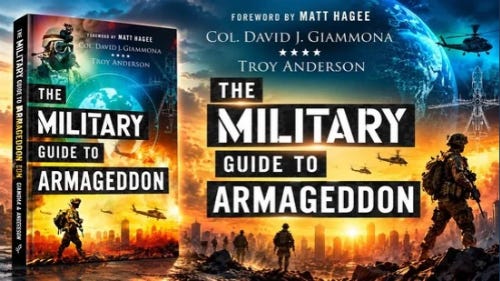
Discover The Military Guide to Armageddon
By Colonel David J. Giammona and Troy Anderson
Are you prepared for the battles ahead? In The Military Guide to Armageddon, Colonel David J. Giammona and bestselling author Troy Anderson combine military insights, biblical prophecy, and practical spiritual strategies to help believers recognize the challenges of the last days, strengthen their faith, and stand ready in God’s army. ORDER YOUR COPY TODAY
A Call for Spiritual Discernment in an Uncertain World
The banking disruptions of November 16, the nationwide FAA ground stop on November 13, and the previously scheduled emergency broadcast test on November 17 have drawn renewed attention to America’s dependence on critical technological infrastructure. Although there is no verified connection between these events, they underscore the importance of reliable communications, secure financial networks, responsible modernization, and national preparedness.
As an investigative journalist and Christian author, I believe developments like these should encourage Americans to ask serious questions about institutional accountability, cybersecurity, financial freedom, and the resilience of essential services. They should also remind believers that our ultimate security cannot rest in governments, corporations, financial institutions, or technological systems, regardless of their apparent strength.
Jesus warned His followers in Matthew 24:4 to guard against deception, while the Apostle Paul instructed believers in 1 Thessalonians 5:21 to test all things and hold fast to what is good. Those principles are especially important when alarming headlines spread rapidly and uncertainty creates opportunities for speculation.
Whether the banking disruptions prove to be temporary technical problems or expose vulnerabilities requiring broader reforms, our responsibility remains unchanged: investigate the facts, prepare wisely, pray faithfully, and place our ultimate confidence in Jesus Christ.
A Prayer for Wisdom, Protection, and National Preparedness
Heavenly Father, we come before You asking for wisdom, protection, and peace during these uncertain times. We pray for the families and businesses affected by financial disruptions, for the professionals responsible for restoring essential services, and for our nation’s leaders as they work to strengthen America’s critical infrastructure. Protect our country from malicious attacks, technological failures, and unnecessary instability, and grant us the discernment to distinguish truth from speculation.
Lord, help us remain prepared without fear, vigilant without anxiety, and faithful in every circumstance. Remind us that our ultimate security is found not in earthly wealth, financial institutions, or human technology, but in Your eternal promises. May we use these moments of uncertainty to draw closer to You, strengthen our families, and share the hope of Jesus Christ with a world searching for answers. In Jesus’ mighty name, Amen.
Discover I’ve Been to Heaven

I’ve Been to Heaven | A Remarkable Journey of Faith, Heaven, and Eternal Hope
What happens when our earthly journey comes to an end? In I’ve Been to Heaven, Steve Boyls and Kathy Boyls, MD, and bestselling author Troy Anderson explore an extraordinary personal account of heaven, faith, and the hope of eternal life. As Dickens’s A Tale of Two Cities reminds us of the power of sacrifice and redemption, this inspiring book invites readers to reflect on the promises of Jesus Christ and the hope that reaches beyond the grave.
An Invitation to Know Jesus Christ
If today’s uncertainties have caused you to reflect on the future, remember that the greatest security anyone can possess is a personal relationship with Jesus Christ. The Bible teaches that Jesus died for our sins, rose again, and offers forgiveness and eternal life to those who turn to Him in repentance and faith.
Romans 10:9 reminds us of the promise of salvation through confessing Jesus as Lord and believing that God raised Him from the dead. Whatever challenges may come, the hope we have in Christ is greater than the uncertainty of this world.
Discover the Prophecies Behind Today’s Global Upheaval
As America confronts growing concerns about financial stability, critical infrastructure, emerging technologies, and global power structures, explore the investigative books of bestselling author Troy Anderson, including The Babylon Code, coauthored with Paul McGuire, and Revelation 911 and Trump vs. the Beast, both coauthored with Pastor Paul Begley.
Drawing on investigative journalism, historical research, and biblical prophecy, these books examine the forces shaping our world, the warnings found in Scripture, and the importance of spiritual discernment and preparedness in uncertain times.
DISCOVER TROY ANDERSON’S INSPIRING BOOK COLLECTION
Your Book. Your Vision. Your Legacy!

From bestselling ghostwriting and editorial development to publishing guidance, Inspire Literary Group helps turn your story into a book that inspires, impacts lives, and leaves a lasting legacy.
Books Change Lives. Yours Could Be Next. Discover Inspire Literary Group →
Ready to share your story? Contact seven-time #1 Amazon and ECPA Bestsellers author and Founder Troy Anderson for a complimentary book, film, or television project consultation.
Email: troyanderson@inspireliterary.com
Phone: 949-887-1511
Sources and verification
Reuters — Downdetector Reports User Issues at Major U.S. Banks (November 16, 2026)
Federal Aviation Administration — Nationwide Ground Stop: Questions and Answers (November 15, 2026)
Federal Communications Commission — Nationwide EAS Test Public Notice (September 16, 2026)
FEMA — Nationwide Emergency Alert System Test Announcement (October 2026)
Reporting note: This article reflects information available on November 16, 2026. The full root cause and final restoration status of the reported banking disruptions had not been established in the sources reviewed. The FAA ground stop and emergency alert test are separate events, with no confirmed causal connection to the banking reports.